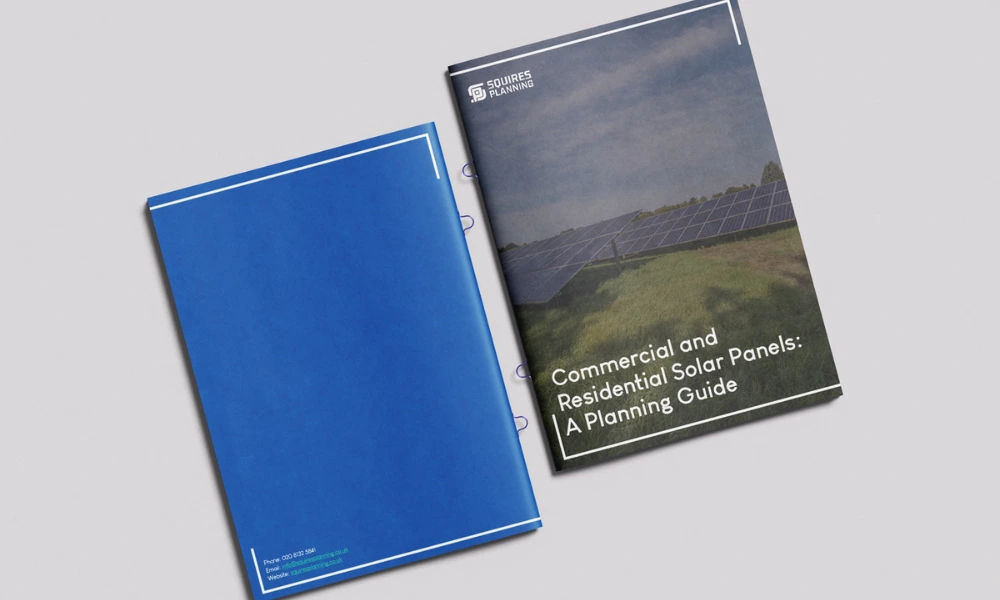
A free guide explaining the planning routes for residential and commercial solar panels
While many solar installations can proceed without full planning permission, there are important rules that commercial and residential property owners should understand before work begins.
Listed buildings, conservation areas and larger commercial systems may require additional planning approvals, while obtaining a Lawful Development Certificate can often provide valuable reassurance when selling, refinancing or leasing a property.
Our guide explains:
Prepared by the planning specialists at Squires Planning, this guide has been designed for homeowners, businesses, landowners, developers and property managers considering solar installations of any scale.
We'll use your email address to send you the guide and occasional planning updates from Squires Planning. You can unsubscribe at any time.